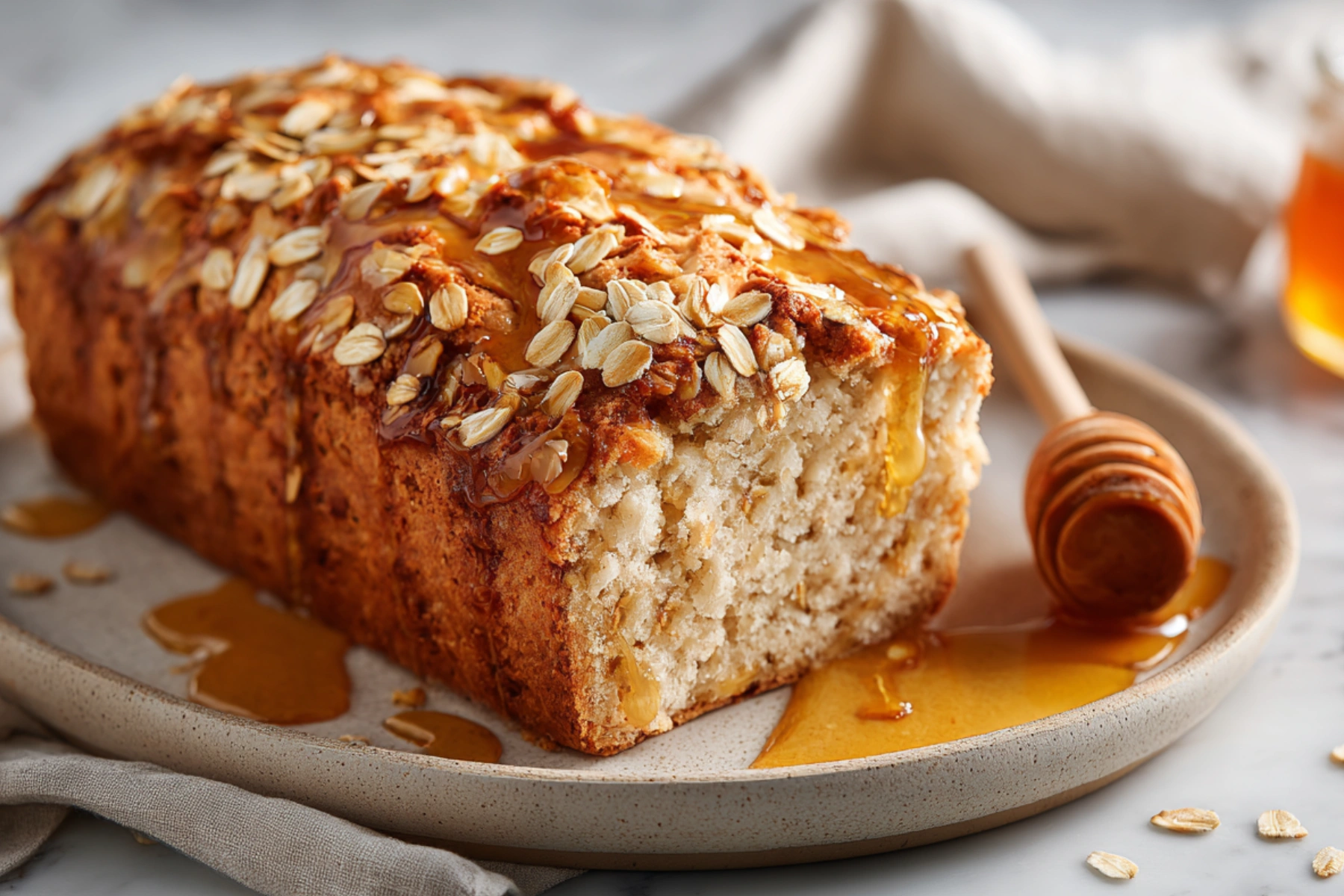

Gluten-Free Honey Oat Bread is a wholesome, comforting loaf that proves gluten-free baking can still deliver soft texture, hearty flavor, and satisfying slices. Made with gluten-free flour, rolled oats, and naturally sweet honey, this bread offers a rustic taste that works perfectly for breakfast toast, sandwiches, or simple snacks. Many gluten-free breads struggle with dryness or crumbly texture, but this recipe solves that problem using psyllium husk and eggs to create structure and moisture.
The result is a loaf that rises beautifully, slices cleanly, and stays tender for days. Oats add a hearty bite while honey provides subtle sweetness that balances the earthy flavor of whole grains. Whether you’re baking for gluten intolerance, celiac disease, or simply exploring healthier bread options, this gluten-free honey oat bread offers a reliable, delicious homemade alternative that fills your kitchen with the warm aroma of freshly baked bread.
Table of Contents
Introduction to Gluten-Free Honey Oat Bread
Why Gluten-Free Honey Oat Bread Is So Popular
Gluten-Free Honey Oat Bread has become one of the most comforting homemade bread options for people following a gluten-free diet. Many gluten-free breads on the market can be dense, crumbly, or overly dry. This recipe offers something different. With the natural sweetness of honey and the hearty texture of oats, gluten-free honey oat bread creates a loaf that feels nourishing, balanced, and satisfying.
The beauty of this bread is its simplicity. Instead of complicated ingredients, it uses wholesome staples like rolled oats, honey, eggs, and a gluten-free flour blend. These ingredients combine to create a loaf that works beautifully for breakfast toast, sandwiches, or afternoon snacks. The oats give the bread a rustic texture while honey adds gentle sweetness that enhances the natural grain flavor.
That same cozy texture also makes this bread pair beautifully with recipes like Creamy Strawberry Chia Pudding or Lemon Blueberry Chia Pudding for a balanced breakfast spread.
Another reason this bread has become popular is its versatility. Gluten-free honey oat bread pairs well with both sweet and savory toppings. Toasted slices with butter and jam make a cozy breakfast, while thicker slices can hold sandwich fillings without falling apart. This is something many gluten-free breads struggle to achieve.
The combination of oats and honey also makes the bread feel wholesome and nourishing. Oats add fiber and texture, while honey provides natural sweetness without overpowering the flavor. Together they create a loaf that feels homemade, comforting, and incredibly satisfying.
What Makes This Bread Different From Other Gluten-Free Loaves
Many gluten-free breads rely heavily on starches to mimic the texture of wheat bread. While this can create a soft loaf, it often lacks the hearty character people expect from homemade bread. Gluten-Free Honey Oat Bread solves this problem by using oats and psyllium husk powder to build a better structure and texture.
Psyllium husk is one of the most important ingredients in this recipe. When mixed with liquid, it forms a gel that mimics gluten’s elasticity. This helps the bread rise properly and gives it a soft yet sturdy crumb. Without psyllium, gluten-free breads often fall apart or become overly crumbly.
Another difference is the single rise method. Traditional wheat breads are kneaded and allowed to rise multiple times. Gluten-free dough behaves differently, so it rises once directly in the baking pan. This technique helps preserve the structure of the loaf and results in a better final texture.
Oats are considered a nutritious whole grain and provide fiber and important nutrients according to research from Harvard’s School of Public Health.
Because of these thoughtful ingredient choices and techniques, gluten-free honey oat bread delivers a loaf that is soft, sliceable, and full of comforting flavor.
Ingredients and Their Role in Gluten-Free Honey Oat Bread
Key Ingredients That Create Structure and Texture
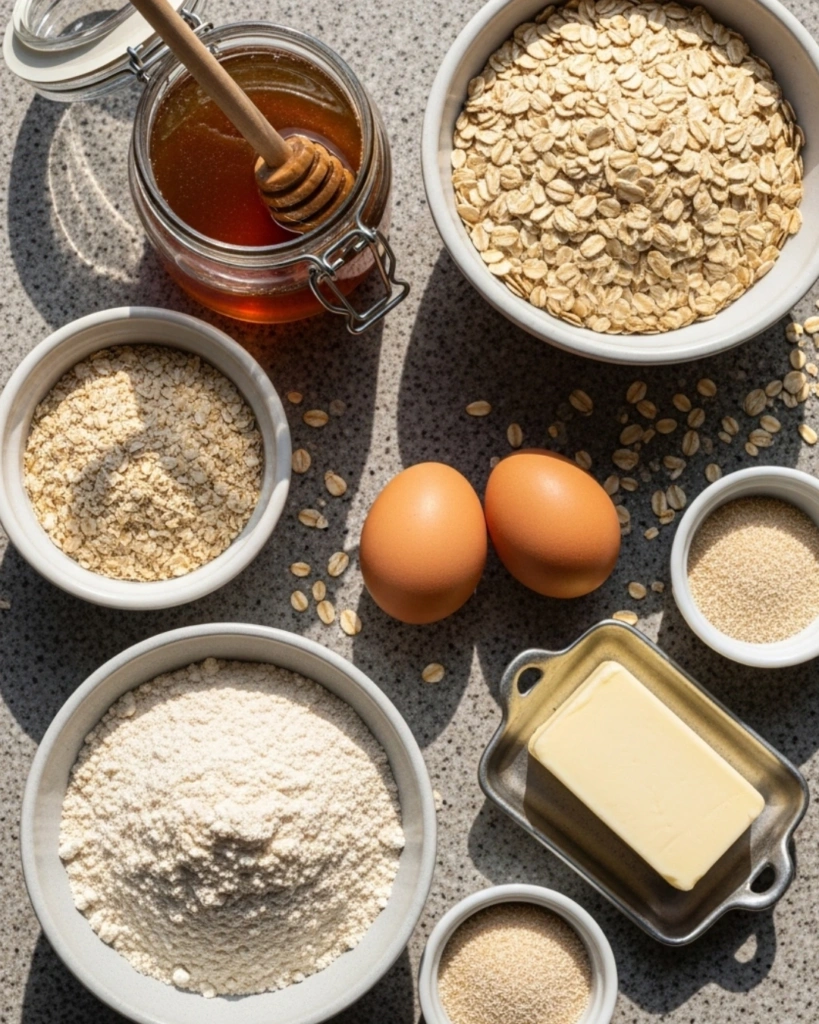
Every ingredient in gluten-free honey oat bread serves an important purpose. Without gluten to provide structure, the recipe relies on a combination of flour blends, oats, eggs, and psyllium husk to create a stable loaf.
Gluten-free flour blend forms the base of the bread. These blends usually contain a mixture of rice flour, starches, and whole-grain flours that provide body while keeping the texture light. Because different blends contain different ratios of starch to grain, hydration levels may vary slightly depending on the brand used.
Rolled oats and oat flour contribute both texture and flavor. Oats give the bread a hearty bite and slightly nutty taste that complements the sweetness of honey. They also increase fiber content, making the bread more satisfying and wholesome.
Psyllium husk powder is crucial for binding the ingredients together. When hydrated, psyllium forms a gel that mimics gluten’s elasticity. This allows the dough to trap air bubbles during rising and prevents the loaf from crumbling when sliced.
Eggs also play an essential structural role. The proteins in eggs help stabilize the bread’s crumb while adding moisture and richness. Without eggs, gluten-free breads often struggle to hold their shape.
Flavor and Moisture-Boosting Ingredients
Beyond structure, several ingredients contribute to the flavor and tenderness of gluten-free honey oat bread. Honey adds natural sweetness and feeds the yeast during fermentation. This helps the bread rise while also enhancing its warm, comforting taste.
Butter adds richness and improves the softness of the crumb. Even a small amount helps the loaf stay moist for longer periods. For those who prefer dairy-free baking, plant-based butter alternatives work well as substitutes.
Warm water activates the yeast and hydrates the flour mixture. Maintaining the correct water temperature is important because yeast performs best around 110°F. If the water is too hot, it can kill the yeast; if it is too cool, the dough may not rise properly.
Salt balances the sweetness of the honey and strengthens the dough structure. Baking powder provides additional lift, helping the bread achieve a lighter texture.
When these ingredients work together, they produce a gluten-free honey oat bread that is both flavorful and structurally sound.
How to Make Gluten-Free Honey Oat Bread
Preparing the Dough and Activating the Yeast
The first step in making gluten-free honey oat bread is activating the yeast. Yeast is responsible for creating the rise and airy texture in the loaf. In a small bowl, warm purified water is combined with active dry yeast and honey. After a few minutes, the mixture becomes bubbly and foamy, which indicates the yeast is active and ready to use.
While the yeast mixture activates, the dry ingredients are prepared in a large bowl. Gluten-free flour, rolled oats, oat flour, psyllium husk powder, salt, and baking powder are whisked together thoroughly. This step ensures that all ingredients are evenly distributed, which helps create a consistent crumb throughout the loaf.
Once the yeast mixture is ready, eggs and melted butter are whisked into it. This creates the wet mixture that will bind the dough together. The liquid ingredients are then poured into the bowl of dry ingredients and mixed gently.
Unlike traditional bread dough, gluten-free dough should not be kneaded. Kneading develops gluten in wheat dough, but since gluten is absent here, kneading would only make the dough heavy. Instead, the dough should be mixed until just combined.
Rising and Baking the Bread
After mixing, the dough is transferred directly into a greased loaf pan. This step is important because gluten-free bread typically only rises once. Allowing the dough to rise in the pan ensures that the structure is preserved.
The loaf pan is loosely covered and placed in a warm environment for about 45 minutes. During this time, the yeast ferments the sugars and produces gas, causing the dough to expand. A warm oven that has been preheated and turned off creates an ideal environment for rising.
Once the dough has risen, the oven is preheated to 350°F. Before baking, oats can be sprinkled on top of the loaf for extra texture and visual appeal.
The bread is baked for approximately 30–40 minutes until the crust becomes golden and the internal temperature reaches around 190–200°F. This temperature ensures the loaf is fully baked without becoming dry.
After baking, the bread should be removed from the pan and cooled on a wire rack. Allowing the loaf to cool completely helps the crumb set properly, making slicing easier and preventing a gummy texture.
Storage and Serving Gluten-Free Honey Oat Bread
How to Store Gluten-Free Honey Oat Bread Properly
Proper storage is essential for maintaining the texture and freshness of gluten-free honey oat bread. Because gluten-free breads lack the structural proteins found in wheat bread, they can dry out more quickly if not stored correctly. Fortunately, a few simple storage techniques can keep the bread soft and delicious for several days.
If you plan to eat the bread within one or two days, storing it at room temperature works well. Place the fully cooled loaf in an airtight container or wrap it tightly in plastic wrap. Keeping air away from the bread helps prevent it from drying out. It’s important to allow the bread to cool completely before storing, as trapped steam can create excess moisture and lead to a gummy texture.
For longer storage, refrigeration can help extend freshness. Sliced gluten-free honey oat bread can be placed in an airtight container and stored in the refrigerator for up to five days. However, refrigeration may slightly firm up the texture, so lightly toasting the slices before eating can restore softness and enhance flavor.
Freezing is often the best option for preserving gluten-free bread. Pre-slicing the loaf before freezing makes it easier to grab individual pieces as needed. Place small pieces of wax paper or parchment paper between slices so they do not stick together. Frozen slices can last for up to three months and can be toasted directly from frozen without thawing.
These storage methods ensure that your gluten-free honey oat bread stays fresh, soft, and ready to enjoy whenever you need it.
Best Ways to Serve Gluten-Free Honey Oat Bread
One of the best things about gluten-free honey oat bread is how versatile it is when it comes to serving. The subtle sweetness from honey and the hearty texture of oats make it suitable for both sweet and savory toppings.
For breakfast, toasted slices with butter and a drizzle of honey create a warm and comforting start to the day. Fruit preserves, nut butter, or cream cheese also pair beautifully with the bread’s mild sweetness. Because the loaf slices cleanly and holds together well, it works perfectly as the base for toast-based breakfasts.
For lunch, gluten-free honey oat bread makes excellent sandwiches. The sturdy crumb holds fillings such as grilled chicken, roasted vegetables, or fresh salads without becoming soggy. Its slightly sweet flavor also pairs well with savory ingredients like cheese and herbs.
It can even be served as a simple side with soups or salads. Lightly toasted slices add a satisfying texture and help soak up broths or dressings.
Whether toasted, topped, or used for sandwiches, gluten-free honey oat bread offers a wholesome and delicious way to enjoy homemade gluten-free baking.
Gluten-Free Honey Oat Bread

Equipment
- small bowl
- large mixing bowl
- Whisk
- greased loaf pan
- oven
- wire rack
- thermometer for checking internal bread temperature
Ingredients
- gluten-free flour blend
- rolled oats
- oat flour
- psyllium husk powder
- active dry yeast
- warm purified water
- honey
- eggs
- melted butter
- salt
- baking powder
- extra oats for topping (optional)
Instructions
- In a small bowl, combine warm purified water, active dry yeast, and honey. Let the mixture sit until bubbly and foamy.
- In a large bowl, whisk together the gluten-free flour, rolled oats, oat flour, psyllium husk powder, salt, and baking powder until evenly combined.
- Whisk the eggs and melted butter into the activated yeast mixture.
- Pour the wet mixture into the dry ingredients and mix gently until just combined. Do not knead the dough.
- Transfer the dough directly into a greased loaf pan and smooth the top.
- Loosely cover the pan and let the dough rise in a warm place for about 45 minutes.
- Preheat the oven to 350°F. Sprinkle oats on top of the loaf if desired.
- Bake for 30 to 40 minutes, until the crust is golden and the internal temperature reaches 190 to 200°F.
- Remove the bread from the pan and cool completely on a wire rack before slicing.
Notes
FAQs About Gluten-Free Honey Oat Bread
Why are oats not added to some gluten-free flour blends?
Many gluten-free flour blends avoid oats because oats can be contaminated with wheat during processing. Additionally, oats contain avenin proteins that some people with gluten sensitivities may react to. Using certified gluten-free oats ensures safety for most gluten-free diets.
What is the trick to making good gluten-free bread?
The biggest secret is using the right binders and hydration levels. Ingredients like psyllium husk, eggs, or flaxseed replace gluten’s structure and elasticity. Proper moisture and careful rising also help create a softer, more bread-like texture.
Why does my stomach hurt after eating gluten-free oats?
Some people react to avenin, a protein found naturally in oats. Others may react to cross-contamination with wheat during harvesting or processing. Choosing certified gluten-free oats can reduce this issue.
Why are Quaker oats not gluten-free?
Standard Quaker oats are processed in facilities that also handle wheat, which can lead to gluten contamination. Some brands offer specially labeled certified gluten-free oats that are grown and processed separately.
Some oats can become contaminated with wheat during processing, which is why experts recommend purchasing certified gluten-free oats, as explained by Beyond Celiac.
Conclusion
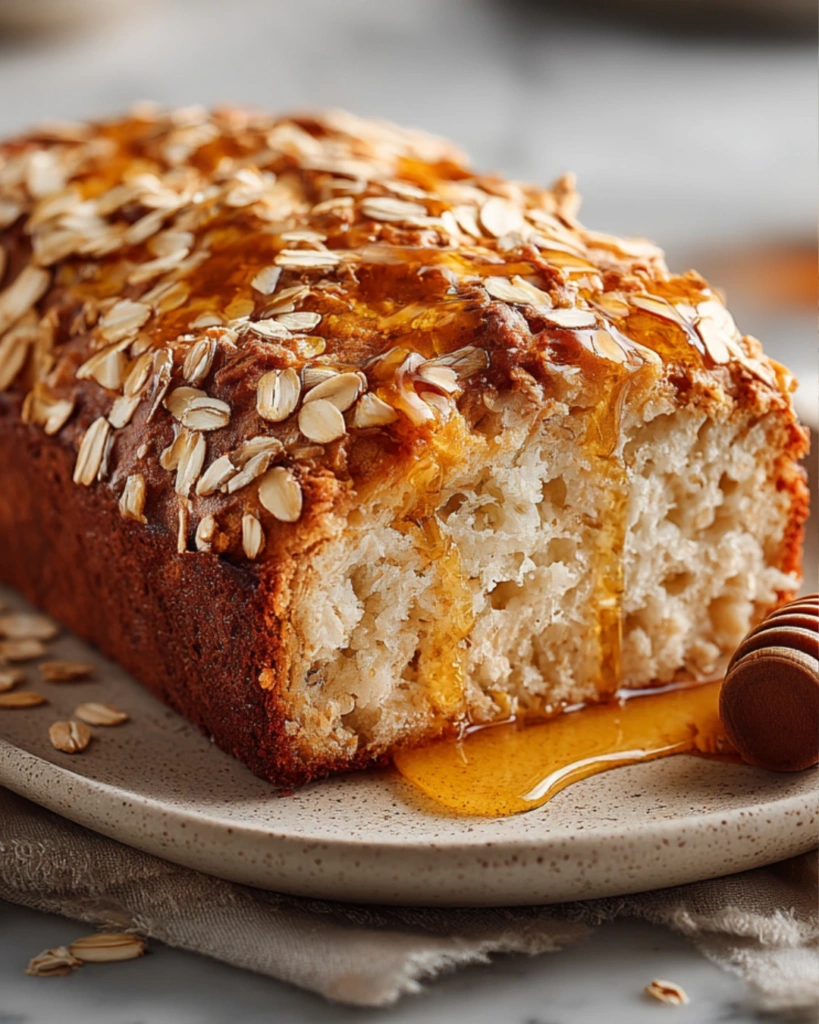
Gluten-Free Honey Oat Bread is a perfect example of how thoughtful ingredients and simple techniques can create a truly satisfying homemade loaf. With its soft crumb, lightly sweet flavor, and hearty oat texture, this bread feels both nourishing and comforting. Psyllium husk and eggs help provide the structure typically created by gluten, while honey and oats contribute natural flavor and balance.
The recipe is easy to prepare and works beautifully for everyday baking, whether you enjoy it toasted for breakfast or layered with fillings for sandwiches. It also stores well and freezes easily, making it a practical addition to weekly meal prep. Once you experience the texture and flavor of this gluten-free honey oat bread, it may quickly become a staple in your kitchen. Simple, wholesome, and dependable, it proves that gluten-free baking can be just as satisfying as traditional bread recipes.